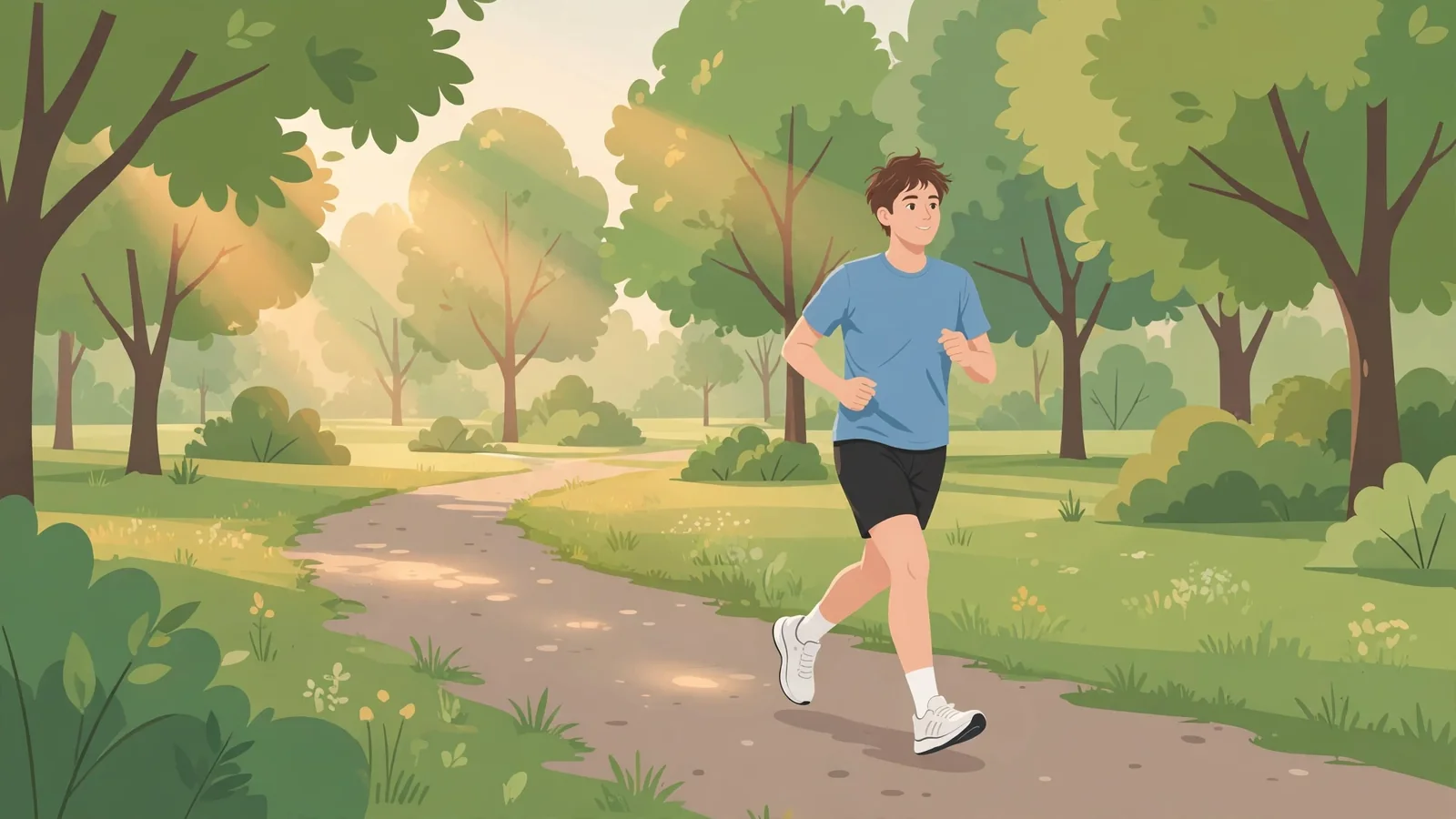
Running looks simple from the outside: put on shoes, head out of the door, move faster than a walk. Yet most people who try it quit within a month, usually because they started too hard, too fast or too often. Learning how to start running properly is mostly about patience. With a gentle walk-run plan, the right expectations and a little recovery sense, almost anyone can go from the sofa to running for thirty minutes without stopping, and actually enjoy getting there.
Why Running Works for Beginners
Running asks for almost no equipment, no membership and no schedule beyond the time you give it. It strengthens the heart and lungs, builds bone density, burns more energy per minute than most forms of exercise, and clears the head in a way few other habits can match. Research on how sports make the body fit and healthy shows that regular moderate exercise improves sleep, mood and long-term disease risk, and running delivers those benefits in sessions as short as twenty minutes. The catch is that your cardiovascular fitness improves faster than your joints and tendons adapt, which is why the plan matters more than the effort.
Before Your First Run: Shoes, Clothing and Common Sense
You do not need a wardrobe of technical gear, but one purchase matters: proper running shoes. Shoes designed for running cushion impact and support your natural stride in a way fashion trainers do not, and a good pair from any major brand is enough; you do not need the most expensive model. Wear comfortable clothing you can move in, dress slightly cooler than feels right indoors, because you will warm up within minutes, and take water with you on warm days. If you have a medical condition, chest pain history or have been completely sedentary for years, a quick conversation with your doctor before starting is sensible. Everyone else can begin gently and listen to their body.
The Walk-Run Method: Your First Six Weeks
The safest way to begin is to alternate running and walking, which builds fitness while keeping impact manageable. Start every session with five minutes of brisk walking to warm up, and finish with five minutes of easy walking to cool down.
In weeks one and two, run for one minute, then walk for two minutes, and repeat that cycle eight times. Do this three times a week on non-consecutive days. In weeks three and four, stretch the running intervals to two or three minutes with ninety seconds of walking between them, keeping the total session around twenty-five minutes. By weeks five and six, run for five to eight minutes at a time with one minute of walking, and once a week try a continuous fifteen-to-twenty-minute easy run. At the end of six weeks, most beginners can run for thirty minutes with only short walk breaks, or continuously at a relaxed pace. Progress is rarely perfectly linear, so repeating a week is not failure; it is how adaptation works.
How Hard Should It Feel? Use the Talk Test
Beginners almost always run too fast. Your easy pace should let you speak in full sentences while you run; if you can only gasp a few words, slow down, even if that means dropping back to a walk for a while. There is no prize for finishing a training run exhausted. Most of your running in the first months should feel comfortably hard at most, the pace at which you could keep going for a long time. Speed arrives on its own as fitness grows, and the runners who stay injury-free are the ones who respect easy days.
Staying Motivated When the Novelty Wears Off
The first fortnight runs on enthusiasm; the habit survives on structure. Put your runs in the calendar like appointments, lay your kit out the night before, and track your sessions somewhere visible, because a row of completed workouts is quietly persuasive. Our collection of tips to motivate yourself to work out has more practical tricks, from habit stacking to finding a training partner. Expect some runs to feel dreadful for no obvious reason; every runner has them, and they say nothing about your progress. Judge the trend over weeks, not the feeling of a single morning.
Recovery: Sleep, Rest Days and Looking After Your Legs
Fitness is built between runs, not during them. Rest days are when muscles repair and strengthen, so never run hard on consecutive days as a beginner. Sleep is the other half of recovery: our guide on how to sleep better explains the simple habits that deepen rest, and they matter doubly when your body is adapting to new training. Gentle practices help too; a short session from our beginner’s guide to meditation can settle both mind and breathing, and the principles in our article on nurturing your mental and physical health apply to runners as much as anyone. Mild muscle soreness a day or two after a run is normal. Sharp pain, pain that changes how you walk, or pain that worsens as you run is not; stop and rest it.
Choosing a Route and Staying Safe
Where you run shapes how often you run. A loop from your front door removes every excuse about travel, and softer surfaces such as park paths, trails or a running track are kinder to beginner legs than endless pavement. In your first weeks, pick routes that are flat, familiar and easy to shorten if you tire; adventure can wait until the base is built. Run facing traffic where there is no pavement, wear something bright or reflective in low light, and tell someone your rough route and return time, or share your live location from your phone. If you run with headphones, keep one ear free or the volume low enough to hear cyclists, cars and other people. A route you feel safe on is a route you will actually repeat, and repetition is the whole secret.
Common Beginner Mistakes to Avoid
The classic errors are easy to dodge once you know them. Doing too much too soon is the first: increase your weekly time by no more than about ten percent. Skipping the warm-up walk is the second. Comparing yourself with experienced runners, online or in the park, is the third, and the most corrosive; their easy pace is the product of years, not talent. Finally, do not race your training runs. Save effort for the plan, and let consistency do the work.
Six weeks from now, the person who started with one-minute jogs can be running half an hour along the river, wondering why it ever felt impossible. That transformation does not come from talent or expensive kit. It comes from starting gently, repeating the habit, and recovering well. Lace up, walk for five minutes, run for one, and begin.